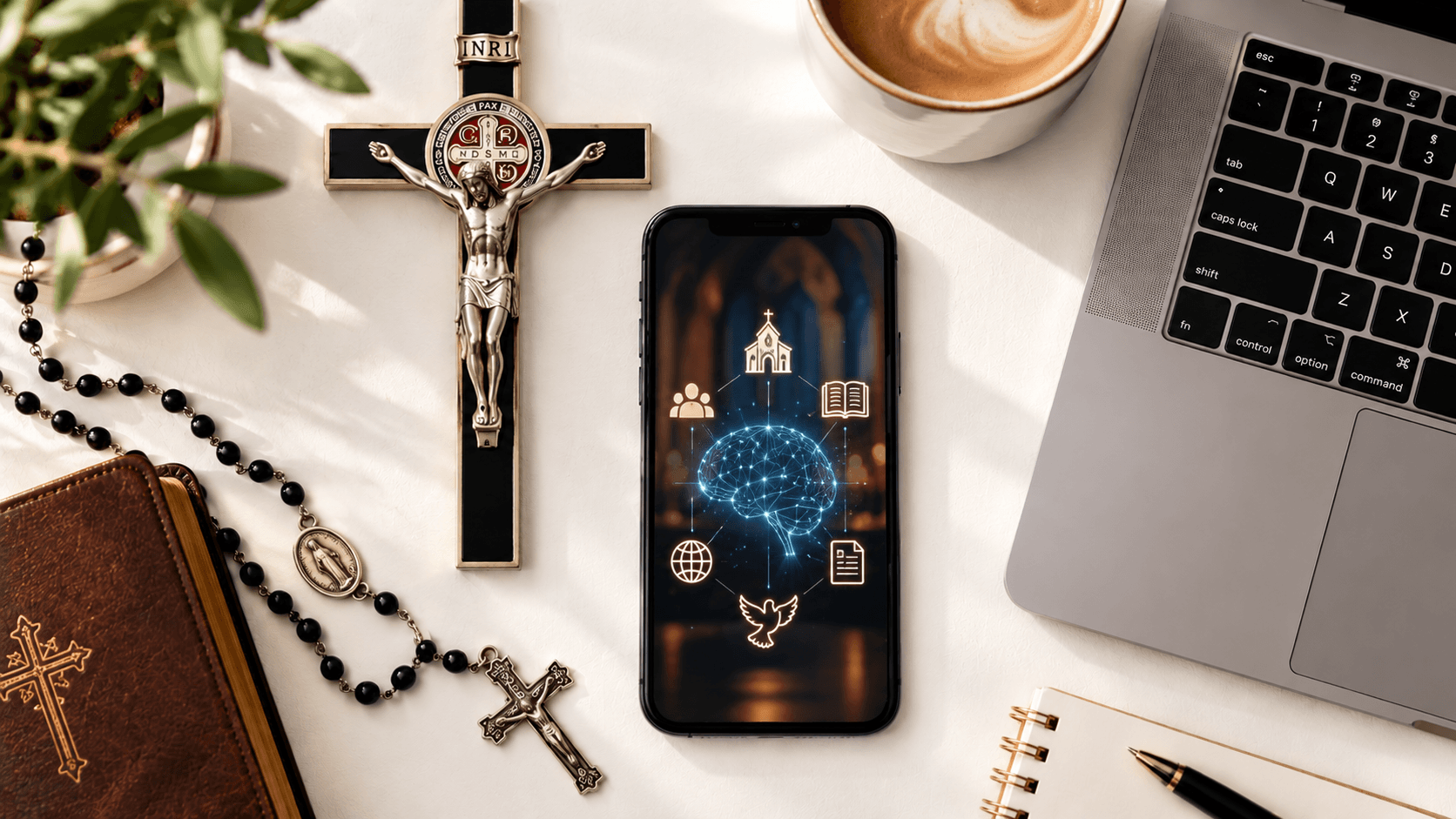
Can modern technology serve a faith rooted in nearly 2,000 years of tradition? And how do we make sure we don't lose something important along the way?
An Ancient Faith in a Changing World
Picture a small Catholic parish on Sunday morning.
An elderly woman kneels quietly in prayer. A young family settles into a pew. The priest prepares to celebrate Mass, just as countless priests have done before him.
There's something beautiful about it all.
Now picture that same parish during the week. The secretary is overwhelmed with emails. Volunteers struggle to update the website. A family new to town can't find the Mass schedule online.
Could artificial intelligence help?
Perhaps it could organize emails, translate a parish bulletin, or make information easier to find.
But what if AI began writing homilies? What if someone turned to a chatbot instead of a priest for spiritual guidance?
Where should we draw the line?
What Do Catholics Actually Think About AI?
Recent research suggests that people are open to AI helping with everyday tasks, but much more cautious about its role in spiritual life.
A 2025 Pew Research Center study found that 73% of American adults believe AI should play no role in advising people about their faith in God.
In June 2026, ACS Technologies published research specifically examining Catholic attitudes toward AI.
The findings suggested that Catholics were receptive to practical uses of AI, such as parish communication and administrative work, while remaining concerned about preserving human relationships.
And in an October 2026 reader survey by U.S. Catholic, 38% of 85 respondents said they had asked an AI chatbot about faith or spirituality. While this small survey doesn't represent all Catholics, it shows that these conversations are already happening.
The message seems clear: Many people welcome technology that helps them, but they don't want it replacing the human side of faith.
Does Tradition Mean Rejecting Technology?
For Catholics who treasure the Church's traditions, the rapid growth of AI can feel unsettling.
Our faith has been passed down through generations. We value the prayers of the saints, sacred music, beautiful churches, and teachings that have guided believers for centuries.
But Sacred Tradition doesn't mean rejecting everything new.
Consider the printing press. It changed how Scripture and religious books reached ordinary people. Later came radio, television, and the internet.
Each invention gave the Church new ways to share the Gospel.
The tools changed. The message did not.
A Catholic who loves Gregorian chant or the Traditional Latin Mass can also appreciate technology that helps preserve and share those traditions.
The question isn't whether technology is new. It's whether we're using it wisely.
What Does the Church Teach?
In January 2025, the Vatican published Antiqua et Nova, a document examining artificial intelligence and human intelligence.
The Church recognizes that AI can offer real benefits. But it also reminds us that human intelligence is much more than processing information.
We are persons created in the image and likeness of God.
AI can explain what the Church teaches about confession, but it cannot hear a confession or grant absolution.
It can describe the Eucharist, but it cannot receive Holy Communion.
It can explain the meaning of love and compassion, but it cannot replace someone sitting beside a grieving friend.
Our Catholic faith isn't simply about having the right information.
It's about knowing and loving Jesus Christ.
Technology Should Serve the Mission
At Catholic Web Hosting, we work with technology every day. We've seen how much good it can accomplish when used for the right reasons.
As we develop VerbumCMS, our goal is to help Catholic parishes, ministries, and organizations spend less time struggling with technology and more time serving their communities.
We believe AI can play a helpful role in that mission.
But we also recognize its limits.
We don't believe technology should replace priests, teachers, artists, or the people who make our Catholic communities special.
And we don't believe every task needs to be automated simply because it can be.
Before using AI, perhaps we should ask ourselves one simple question:
Is this helping us serve others and draw closer to Christ, or is it replacing something that should remain human?
The Mission Hasn't Changed
Artificial intelligence will continue to develop. Catholics will continue to disagree about how it should be used.
That's okay. These are conversations worth having.
We can respect those who are cautious about new technology while recognizing the opportunities it creates for evangelization.
We don't need to chase every new invention, and we don't need to fear every new invention either.
We need wisdom, humility, and a willingness to listen.
Because no matter how advanced technology becomes, it will never replace the beauty of a family praying together, a priest celebrating Mass, or someone extending a hand to a person in need.
At Catholic Web Hosting, we believe modern technology can serve an ancient faith.
The tools may change, but our mission remains the same: to proclaim Jesus Christ to the world.
St. Carlo Acutis, pray for us.
What do you think? Does artificial intelligence have a place in Catholic ministry and evangelization? Where would you draw the line? We'd love to hear your thoughts.